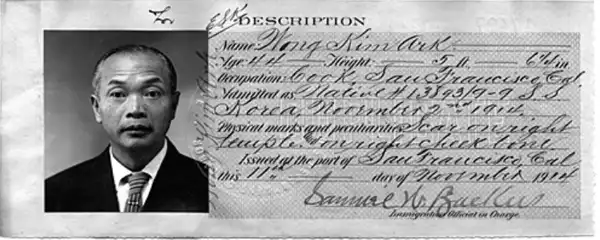
Lesson Plan Landmark Supreme Court Cases and the 14th Amendment
- Grade Level 6th-8th Grade
- Time Period Early 1900s
Introduction
This lesson plan introduces students to the complex relationship between race, citizenship, and the 14th Amendment through landmark Supreme Court cases involving Asian American plaintiffs. By exploring United States v. Wong Kim Ark, Takao Ozawa v. United States, and United States v. Bhagat Singh Thind, students analyze how the Court defined birthright citizenship and racial eligibility for naturalization. Through group research, critical discussions, and a UDL choice board project, students examine how these cases shaped legal precedent, challenged definitions of race, and influenced the civil rights of Asian Americans.
Essential Questions
What were the key legal arguments and outcomes in the United States v. Wong Kim Ark case, and how did it impact the interpretation of the 14th Amendment regarding birthright citizenship?
How did the Supreme Court’s decision in Takao Ozawa v. United States define racial eligibility for naturalization, and what criteria did the Court use to determine Ozawa’s eligibility?
What reasoning did the Supreme Court use in United States v. Bhagat Singh Thind to deny Thind’s claim to citizenship, and how did this case influence the racial classification and naturalization laws in the United States?
What are the long-term implications of these landmark cases for Asian American civil rights, and how do they continue to influence contemporary discussions about race, citizenship, and immigration?